

Plenary or Partial Catholic Indulgences: A Concise Walkthrough
A Practical Introduction & How to Incorporate Them Into Your Spiritual Life
I was talking to a friend of mine after Divine Mercy Sunday Mass and, mentioned that we were excited to learn we could receive a special indulgence for this feast day.
His response was, "I didn't realize that. How much does it cost?" I could not tell if he was joking.
The reality is, most people, including Catholics, do not have a strong understanding of why the Catholic Church dispenses indulgences nor how to acquire them. To help bring more clarity to this ancient and beautiful practice, we have some information to share.
A Helpful Book for Praying the Rosary Every Day: The Beads: Rosary Meditations Guided by the Saints
What are Indulgences?
Indulgences are something within the Catholic faith that can be a source of confusion for many, and even an obstacle for those considering converting to Catholicism. This is especially because of their controversy in the medieval Church, when the buying and selling of indulgences occurred. However, past abuses do not negate the validity of such practices today. In fact, indulgences are part of the Church’s infallible teaching, and the Council of Trent condemns anyone who disbelieves them. Many who struggle with indulgences, however, may not fully understand what they even are.
The Code of Canon Law defines an indulgence as follows:
- "An indulgence is a remission before God of the temporal punishment for sins the guilt of which has already been forgiven, which a properly disposed member of the Christian faithful obtains under certain and definite conditions with the help of the Church which, as the minister of redemption, dispenses and applies authoritatively the treasury of the satisfactions of Christ and the saints".
What does this mean? First, it would be helpful to define what temporal punishment is: Temporal punishment refers to the penalty we have to pay for sin either in purgatory or on earth.[1]
When we sin, we must suffer penances according to God’s justice, as our sins incur both guilt and punishment upon our souls.[2]
Bonus: Download free PDF Guide to Plenary and Partial Indulgences.
How Indulgences Work
Because the Church has the authority to dispense the merits of the body to those most in need of graces, indulgences loosen us from the penalties of our sins, provided that we have confessed them. Just as other people can benefit from our personal prayers for them, we can benefit from the graces dispensed by indulgences.[3] Again, similarly to prayer, indulgences can be applied to the deceased souls in purgatory, but not to the living except for yourself.
The Two Types of Indulgences: Partial vs. Plenary Indulgences
|
Plenary |
Partial |
|
Removes part of the punishment due to sin |
Removes part of the punishment due to sin |
|
Limited to one a day |
Can receive an unlimited number a day |
|
To gain: must follow five steps of the “indulgence formula” |
To gain: Must do the devotion associated with the indulgence with a contrite heart |
Plenary Indulgence Formula
- Be in a state of grace
- Go to confession within a twenty-day period (can be before or after the indulgence)
- Receive Holy Communion
- Pray for the Pope’s intentions
- Pray any additional prayers associated with the indulgence
Related: Why Do Catholics Pray Novenas? A Helpful Introduction
The Most Important Requirement for Plenary Indulgences
Like any devotion or practice within the Church, indulgences require a pure intention to be truly meritorious. The skepticism surrounding indulgences is usually based on the false idea that they are “too good to be true.” However, the fruits of indulgences are not always guaranteed for anyone who simply goes through the motions of prayers and penance.
- The most important condition for receiving a plenary indulgence is detachment from sin- detachment does not mean sinlessness, but rather the ability to renounce our sins.
- Without genuine and firm resolve to amend our ways and avoid even venial sin; we cannot be pardoned from temporal punishment.
Bonus: Download free PDF Guide to Plenary and Partial Indulgences.
A List of Partial Indulgences
There is a variety of daily devotions that are also indulgences, you may be praying some of them already! The Church offers many ways you can receive partial indulgences, and there are even easy ways to receive plenary indulgences as well. Here is a brief list of partial indulgences that you can receive right now:
If you do any of the following with a contrite heart, you will receive a partial indulgence:
- Read Sacred Scripture
- Angel of God prayer
- Spend time before the Blessed Sacrament
- An act of spiritual communion
- Recitation of Psalm 129 (“Out of the Depths”)
- The Magnificat
- The Memorare
- Spend time in mental prayer
- “Eternal Rest” prayer (applied only to the souls in purgatory)
A List of Plenary Indulgences
Many plenary indulgences are associated with special feast days such as Divine Mercy Sunday, but here are some great ways to receive a plenary indulgence more regularly:
- Pray the Rosary in a church or public oratory or in a family group
- Perform the Way of the Cross devotion
- Read Sacred Scripture for at least 30 minutes
- Spend time in front of the Blessed Sacrament for at least 30 minutes
Related: 4 Easiest Ways to Pray the Rosary Everyday
How to Incorporate Indulgences into Your Spiritual Life
Here are a few ways to prepare your soul for indulgences, and to become more aware of habits that can help you receive them:
- Develop a habit of regular confession: going to confession can be a commitment and creates the most friction when it comes to receiving indulgences. To solve this, try going to confession at the same time each month, such as on First Saturdays.
- Develop the habit of a nightly examen: The examen is an important habit to be more aware of the temptations we fall into each day and to help us see clearly if there are sins we are attached to. This is especially helpful when it comes to receiving plenary indulgences.
- Utilize a Liturgical Calendar: One of the best ways to be aware of an upcoming plenary indulgence opportunities is to use a liturgical calendar in your daily life. With a liturgical calendar, you can mark indulgences granted on certain feast days and schedule your confession days.
- Every morning or night, whenever you plan your day, also incorporate looking at your liturgical calendar to help plan your spiritual life.
- Add on to devotions in your existing prayer routine: stack prayers and devotions to get into the habit of saying them together.
- For example, add a Memorare prayer after saying the Rosary or conclude the reading of Scripture with the Magnificat.
Bonus: Download free PDF Guide to Plenary and Partial Indulgences.
Indulgences as Foundational to Christian Living
Indulgences are vital to Catholic spirituality, not only because they have the ability to free our souls from punishment, but also because obtaining them requires that we feel remorse for our sins. To receive indulgences demands a constant conversion of our hearts, which demonstrates how indulgences are not a shortcut to salvation as skeptics may believe, but a way to true repentance. Indulgences are not only an ancient teaching of the Church but should be understood as an everyday part of the Christian life. They are a gift given to the faithful to aid us on our journey to Heaven and can be easily integrated into our daily devotions to bear greater fruit.
Now that you have read this primer, we would encourage you to pick one of the partial indulgences from the list above, do the practice, and receive an indulgence right now!
ABOUT THE AUTHOR
M.K.S is an English Literature major and recent graduate. In her free time, she enjoys reading, writing, graphic design, and learning about Carmelite spirituality.
[1]Fr. John A. Hardon, Modern Catholic Dictionary, s.v. "Sacramental," Catholic Culture, https://www.catholicculture.org/culture/library/dictionary/index.cfm?id=36796&randomterm=false
[2]James Akin, "A Primer on Indulgences," EWTN Catholic Library, https://www.ewtn.com/catholicism/library/primer-on-indulgences-1124
[3]Dave Armstrong, "The Biblical Roots and History of Indulgences," National Catholic Register, May 25, 2018, https://www.ncregister.com/blog/the-biblical-roots-and-history-of-indulgences
Reverent Road to Sunday: A Daily Journal for Developing Habits in the Liturgical Year
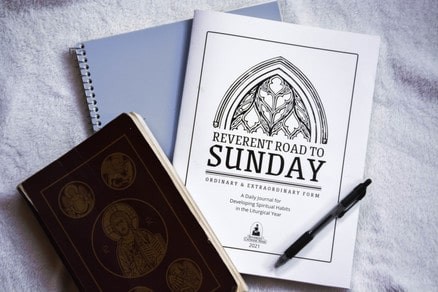
If you have been struggling to stay on track and make progress in the spiritual life, perhaps The Reverent Road to Sunday: A Daily Journal for Developing Spiritual Habits in the Liturgical Year will help.
Features:
-
Novus Ordo feast days and readings
-
Traditional Latin Mass (1962) feast days and readings
-
Checkboxes with daily spiritual habits reminders such as the Morning Offering, daily Mass, silent prayer, rosary, spiritual reading, Angelus, and Daily Examen
-
Monthly confession reminders
-
Weekly Friday abstinence reminders
-
Tons of space for notes to track your progress
The Beads: Rosary Meditations Guided by the Saints
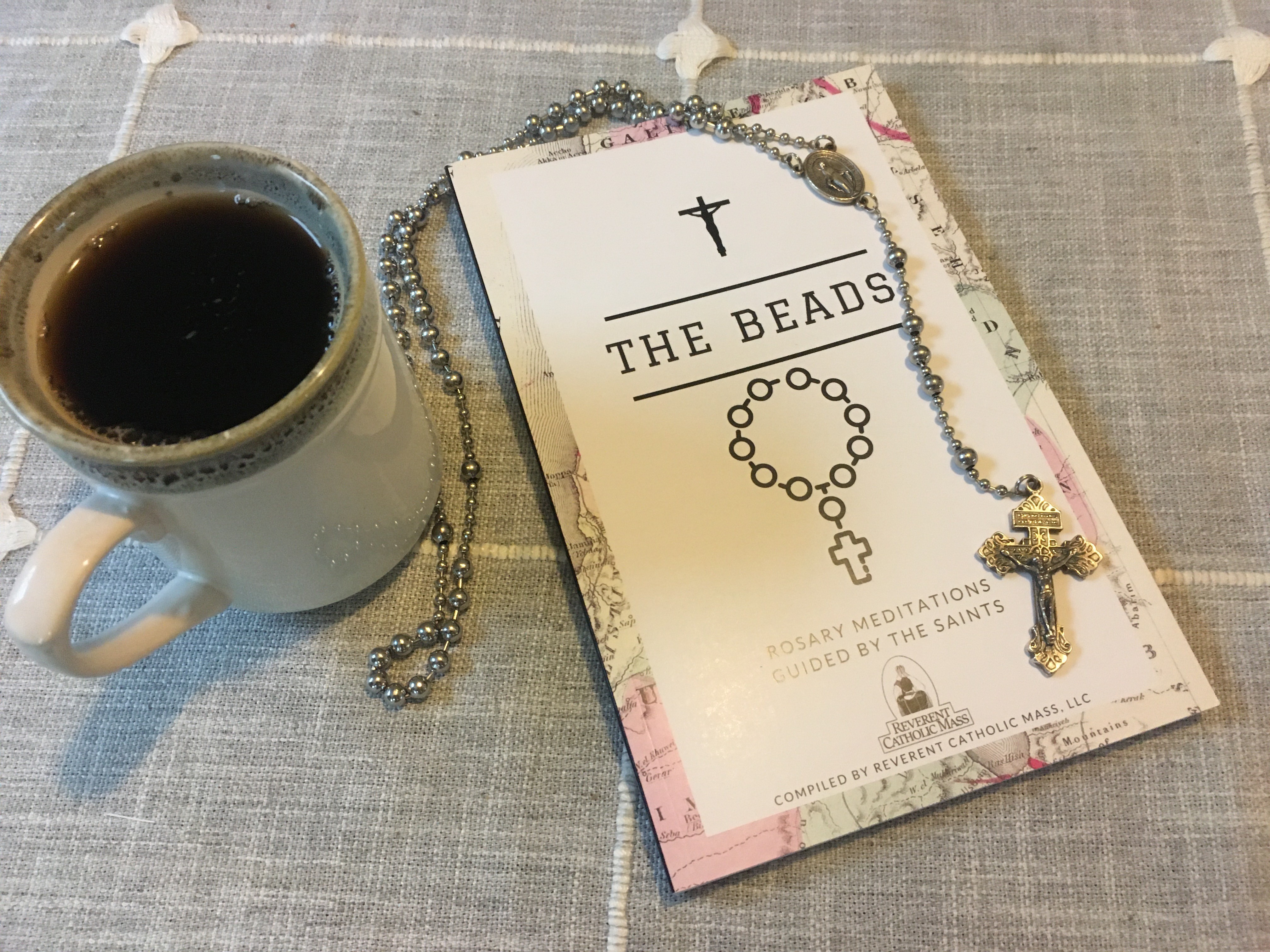
This Rosary Meditation Guide will help you meditate on the life of our Lord, Jesus Christ by taking you bead-by-bead on a journey using reflections from the Douay-Rheims Bible, St. Alphonsus De Liguori, and St. Bonaventure.
If you're looking for a new resource to help you pray the Rosary better and stay more focused, definitely check out "The Beads."
Join hundreds of other Catholics and become a Premium Supporter to gain access to the most authoritative list of faithful Catholic locations mapped out across the United States!

The premium map is so useful! It packs so much useful data in one place. It is a great resource for Catholics who desire location specific information to match their faith. - Michael